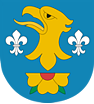
 Powiat Wodzisławski
The oldest traces of human presence in what is now the administrative district of Wodzisław come from the Paleolithic era, when the snow began to subside in this part of Europe together with permafrost from the arctic glaciation. It is easy to assume that the conditions were not very favorable and yet our ancestors, with an energy that deserves praise, tried their best to adapt to their surroundings. Evidence of such activities have been found by archaeologists in the form of microlithic tools.
From the early Neolithic era (2000 – 1800 B.C.E.), there are distinct traces of a settlement within the borders of the present town of Syrynia. The Łyżyc Culture, which came into Silesia around 1300 B.C.E., left its mark on the territory of Wodzisław in the form of a burial-ground in Gorzyczki and from later findings in Gorzyce and Lubomia.
During the time when the southern and western parts of Europe witnessed the undivided rule of the Roman Emperors and were marked by the conquests of the legions; the territory of the present Wodzisław District, due to its proximity to the Moravian Gate, became a territory crossed by trade routes, which linked the northern provinces of the Empire with the Baltic Sea. Treasure troves from this period have been found in both Gorzyczki and Wodzisław.
In the early-mediaeval period, the Gołęszyca tribe lived on this land. One of the major finds from this period are traces of a defensive settlement in Lubomia from the seventh century, which was founded on the ruins of an earlier settlement situated on the same site. The lack of written sources regarding the territory of Wodzisław from the beginning of the state of Poland does not allow for a detailed account of the territory’s history from this period, however, Christianity was accepted on the territory of Wodzisław together with the State of Greater Moravia, hundred years before the Polanians. There is a legend regarding these events about the Saints Cyril and Methodius and their mission to bring Christianity to Jedłownik, a holy cross which stands on a hill in Jedłownik is said to be a keepsake from their visit. During the Tatar invasion of 1241 some very dramatic events took place. These warriors, whose route ran through the territory of Wodzisław, destroyed the old defensive castle which was located to the west of Wodzisław. A specific holdover from the time of the Tatar invasion within the Wodzisław District is the oft encountered surname Tatarczyk. The legends state that those with the surname Tatarczyk can be traced back to their Asian ancestors.
Traces of this invasion can be found in Rydułtowy as well. One of the old districts, which is the second most populous area within the administrative district, was called Buńczowiec. The word ‘Buńczuk’, as stated in the encyclopedia, means “a war banner used by the Tatars which looked like a horse’s tail with a half-moon”.
During the reign of Piast dynasty, the Dukes of Racibórz controlled the area. Leszek Raciborski, known for his pro-Czech sympathies, paid homage to the feudal ruler of the present-day Czech Republic, John Luksemburg in 1327. This date marks an important moment in the history of Wodzisław. History of the territory of Wodzisław, as understood in today’s categories, dates back to the Middle Ages. The existence of the Duchy of Wodzisław (Ducatus Loslensis) is first mentioned at the end of the fifteenth century, though it is certain that the separation of the Duchy of Wodzisław from the Duchy of Racibórz happened during the reign of the duchess Constance from the Piast dynasty line, who, according to sources, died in Wodzisław in 1351. By this time, the town of Wodzisław was over a hundred years old and had become the local center of governance. The Smaller Free National State of Wodzisław was founded at the beginning of the sixteenth century, on the clearing of what was probably the former Duchy of Wodzisław. The Smaller Free National State of Wodzisław had its center in the town of Wodzisław, where the owners of this small state had their residences.
In the mid-eighteenth century an administrative unit called Kreis Loslau appeared on the maps of Silesia, which was the consequence of the Prussian reorganization of the old Austrian province, and even though in essence it overlapped with the borders of the national state, it was not connected with the establishment of a separate administrative district of Wodzisław. This term can be explained as the district or periphery territory of Wodzisław , which at the same time belonged to the administrative territory of Pszczyna, and later on to the administrative district of Pszczyna. Then, from 1818, it belonged to the administrative district of Rybnik. Its borders were, to some extent, formed from the southern part of the administrative district of Rybnik in 1954. The administrative district of Wodzislaw had its headquarters in The Administrative District People’s Town Council. The area which makes up today’s Wodzisław District overlaps considerably with the area of the former district, which was established in 1954 and prevailed until the time of Gierek reforms in 1975, when Jastrzębie, together with its neighboring communes from the former district existed as part of the then Stalingrod provincial administration. As for Rydułtowy, it was part of the administrative district of Rybnik. And so we come to the present, where thanks to the administrative reforms within the country, the Wodzisław District reappeared on the map of Poland on January 1st 1999.*
* When writing this text the following material was used: selected passages from the histories of Rybnik and Wodzisław Śląski, The Chronicles of Wodzislaw, The Scenery of the Territory of Wodzisław courtesy of Kazimierz Cichy, An Outline of the History of Rydułtowy by Aleksandra Matuszczyk – Kotulska, as well as publications by The Starosta of the Administrative District in Wodzisław Śląski.